
Do twice the work in half the time, tell better stories with pictures, learn the basics of DevOps and data engineering, and figure out what to measure in the first place.
Hello again, it’s been a while (sorry about that). New year, new start right?
I read 40 books1 in 2023, and a handful of them were ones I picked up because I thought they might help me at work. I happen to work as a data professional, but some of these titles have broader appeal.
Here's what I thought of them, and let me know what books have furthered your professional knowledge recently in the comments below.
Scrum: The Art of Doing Twice the Work in Half the Time
Jeff Sutherland
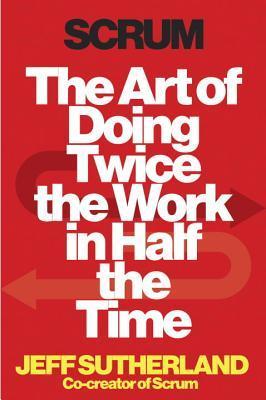
Before Jeff Sutherland became known for Scrum, he had served with the United States Air Force during the Vietnam War and later earned a masters in statistics and a doctorate in biometrics. And this is just the start of his career, so it's true to say that he'd experienced many different ways of working before he developed Scrum. And did I mention that he was one of the signatories of the Agile Manifesto at that famous meeting in Snowbird, Utah in 2001?2
This book tells the story of Scrum by telling the story of Jeff's professional life. You'll learn a lot about Scrum through reading this, as I did, but the strength of the material lies in Jeff's ability to tell a story. This isn't a technical book, it's one that stresses simplicity and is written in plain English.
As I was about to start managing a technical team for the first time, this book gave me some of the clarity I needed to bring small, incremental improvements to ways of working within that team, and I think in the end that not only improved productivity but kept the team happy.
Picture This: How Pictures Work
Molly Bang
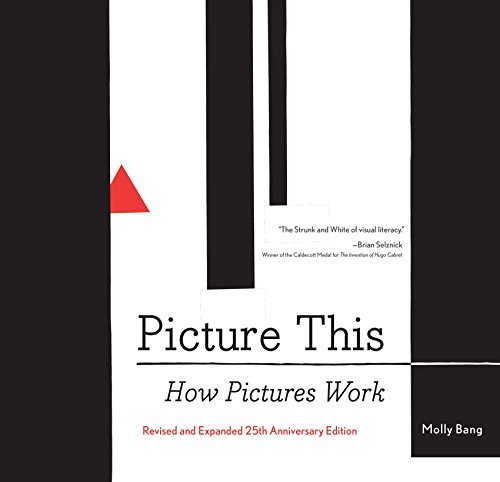
You can learn everything you need to know about this book by watching Cole Nussbaumer Knaflic's video about it - in fact, I first heard about this book through that video.
The book is split into two parts: the first tells the story of Red Riding Hood using simple shapes, and the second part is Molly Bang's concise thesis on how colour and shape affects the viewer's perception. The entire book is only about 150 pages, and the real joy of it lies in re-experiencing a familiar story in an entirely new way, accompanied by Bang's commentary as she makes deliberate choices to convey key moments in the narrative.
Cole is, of course, famous for her company Storytelling With Data (she also has a book by the same name), but whilst Molly Bang's book isn't about data visualisation it is about how to tell a story with shape, space, and colour - the key ingredients, after all, of any data visualisation.3
The Phoenix Project: A Novel About IT, DevOps, and Helping Your Business Win
Gene Kim, Kevin Behr, & George Spafford
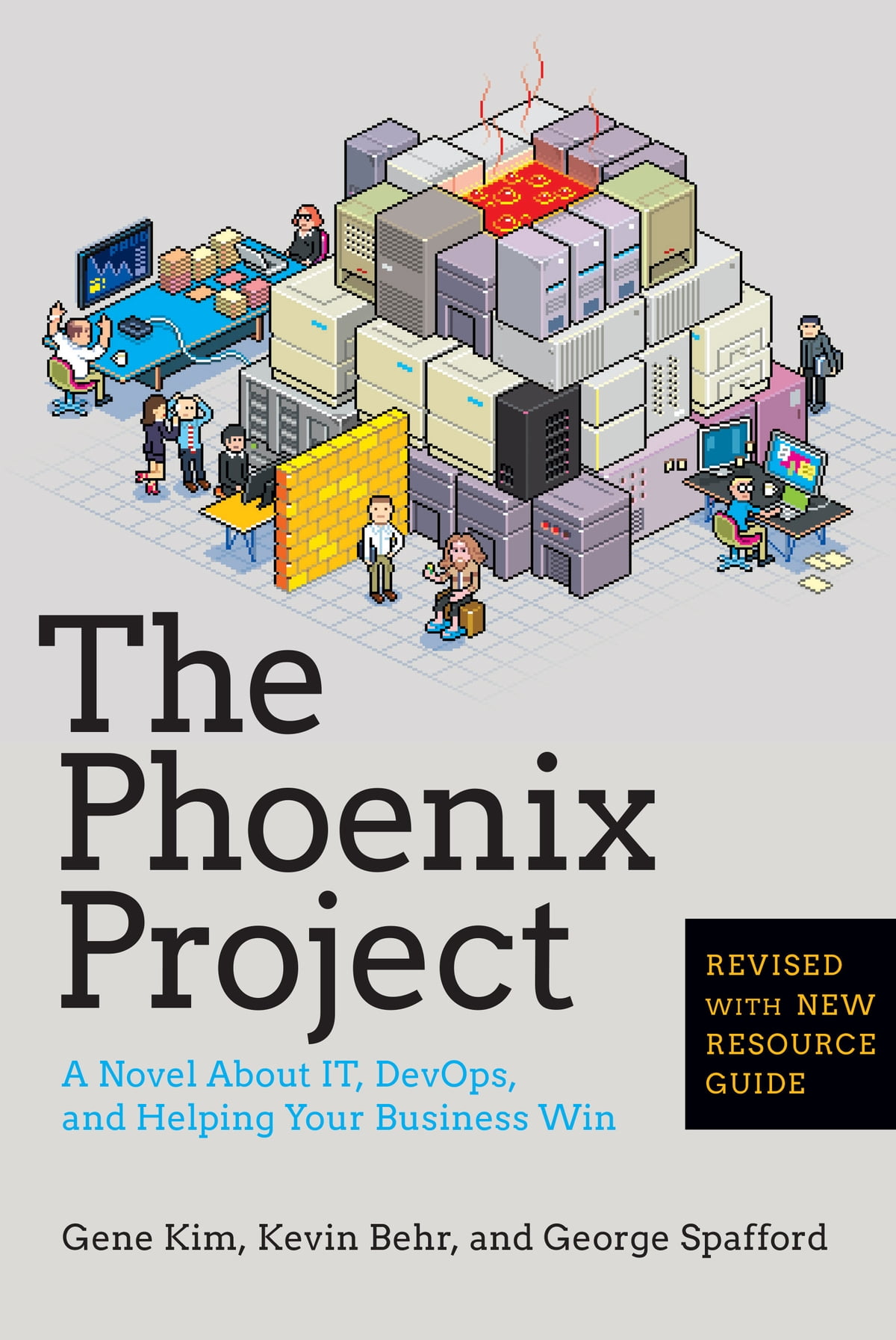
A book about DevOps is going to be hard-going even if you’re interested in the subject to begin with, but what if you’re clueless about the topic? Well, how about a novel about DevOps? I’ve already talked a bit about the strength of the storytelling in Jeff Sutherland’s book, but The Phoenix Project takes that to the next level by relying entirely on storytelling to educate the reader about a different way of working.
The basic premise is that Bill, the central character, is shoulder-tapped as the next Head of IT at a large company called Parts Unlimited to rescue Project Phoenix, which in turn is meant to save the company. Along the way, he encounters a prospective board member who serves as something of a guru (think more Matthew McConaughey than Morpheus), and who waxes lyrical about The Three Ways and Eliyahu Goldratt.
The Phoenix Project is engaging, funny, and, yes, informative. Of course it won’t make you an expert in DevOps but then no single book will accomplish that. But it certainly made me interested in the topic, and as an introduction to a rich area of knowledge concerned with better ways of working in IT it’s essential.4
Fundamentals of Data Engineering: Plan and Build Robust Data Systems
Joe Reis & Matt Housley
Data nerd that I am, I spent some of my Christmas break at the end of 2022 learning the fundamentals of dbt.5 At the same time I was reading about Meltano and DuckDB, and it occured to me that there was an entire field of the data profession which remained obscure to me: data engineering, which is arguably where much of the focus is right now in my profession.
The story goes something like this: the Big Data craze took off about a decade ago and with it came lots of tools and techniques that required specialists to understand (thank Hadoop and MapReduce); at the same time, Data Scientist was the sexiest job title of the 21st century and CEOs everywhere felt they were on the cursp of a bright future where data was the new oil… or something.
Anyone who’s worked in data for long enough knows what happened next: the highly-paid data scientists with PhDs were spending more time wrangling data than they were running machine learning models, and the Big Data dream turned into a nightmare of data swamps and spaghetti code.
Tristan Handy, who founded dbt, recognised years ago that this problem has already been solved - on our software engineering teams.6 Handy points to the proliferation of mature open-source tools as the playbook for modern analytics, with a code-first approach supported by version control, documentation, and modularity. When I took over managing a team of data analysts last year, I spent most of my time advocating for this approach and ensuring the team had the skills and knowledge needed to work in this way.
Fundamentals of Data Engineering was the next piece in the puzzle for me, because it surveys the broader data landscape. dbt is a tool that you use somewhat “downstream”, in the sense that the data you’re transforming has already been processed to an extent by another human - and that human is the data engineer. If you want to understand what data engineers do, where analytics engineers and data analysts fit into the equation, and where things are heading, then you can’t do better than this book.
Balanced Scorecard: Step-by-Step for Government and Nonprofit Agencies
Paul R. Niven
Having worked for about a decade in various data roles in the public and nonprofit sectors, I’ve encountered similar problems over and over again: the business people either think they don’t need to use data or they overestimate the utility of it, and the data people are either too busy evangelising the virtues of data to understand the business they work for or they’re too busy fixing (non-critical) data pipelines to communicate insights at all. What’s always missing from this picture is something I only truly came to appreciate in 2023: often, neither the business people nor the data people know what to measure in the first place.
From my experience there is plenty of truth to the maxim that what gets measured gets managed, and often we measure the things that are easy to measure.7 These sorts of things are typically inputs and outputs: we spent this much, this many people were involved, this many people attended, this much money was raised and so on. These aren’t unimportant, but because this data is some of the most readily available it’s often where we focus most of our attention, and it’s this sort of data that occupies data teams when they’re fixing pipelines.8
What’s often forgotten amongst all this is the thing that a bunch of senior people work very hard to produce and make a big fanfare about for a week and then everyone mostly forgets about it: the strategy!
Look, Paul Niven’s book has its flaws9, but the fundamental ideas here are clear and convincing: start with your mission, your values, and your vision, then build your strategy and map it out using a small number of key objectives across four perspectives (financial, employee learning and growth, internal processes, and customer), before finally associating each objective with a measure.
Most nonprofit and public sector organisations have a mission, values, and a vision, and they’ll all periodically put out a strategy. Before investing in expensive machine learning models and cutting-edge AI, if they instead focus on the data that’s needed to answer one simple question they’ll be much better served: are we delivering what we set out in our strategy?
You can see all the books I read this year on my Goodreads 2023 Challenge page (and I promise more of them were written by women than those featured in this newsletter, even if I didn’t quite achieve a 50/50 split): https://www.goodreads.com/user_challenges/40837445
You can read the whole thing right here: http://agilemanifesto.org/
Cole’s actually written a number of books, and you can learn more about them on her company’s website: https://www.storytellingwithdata.com/books
There’s also a sequel called The Unicorn Project which focuses more on software development.
You can do this course for free if you’re interested (you even get a certificate that you can pop on your LinkedIn!): https://courses.getdbt.com/courses/fundamentals
Read his blog post for 2016 here (I point my colleagues to this ALL THE TIME): https://www.getdbt.com/blog/building-a-mature-analytics-workflow
This quote is often attributed to Peter Drucker, perhaps erroneously: https://medium.com/centre-for-public-impact/what-gets-measured-gets-managed-its-wrong-and-drucker-never-said-it-fe95886d3df6
A focus on inputs and outputs also influences the content of the communications sent out to key stakeholders such as donors, to whom fundraising departments proudly tout the dollars raised and staff resources spent far more often than the differences made to lives.
This is a book that includes glowing anecdotes about Rudy Gulliani and Donald Trump. I’m not here to judge you for your politics, but you’ve got to admit that Niven’s choice of inspirational stories read differently in 2023 than they would have when this was first published.