
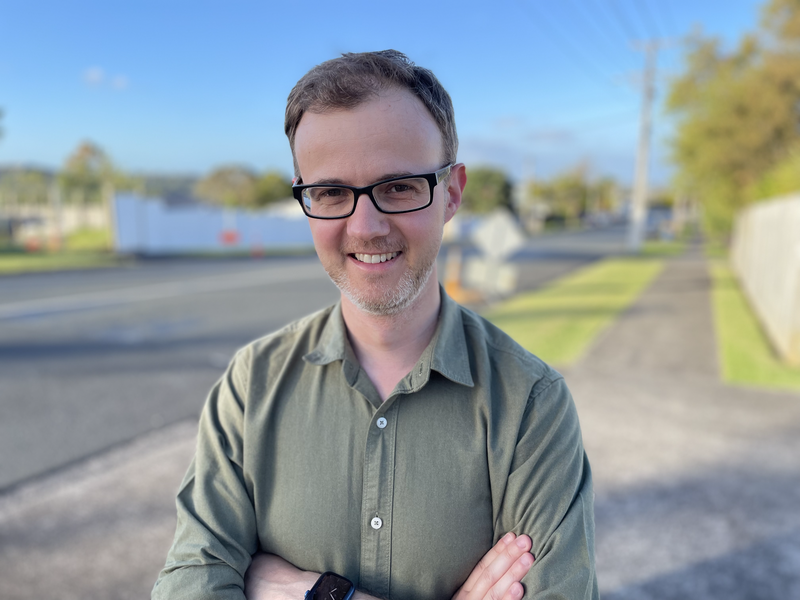
Despite working in various different data roles for the best part of twenty years across multiple industries and in two countries thousands of miles apart, the truth is I’ve never attended a conference on my own until now.
There’s a reason for that, albeit one I only discovered very recently: I’m autistic.
What it’s like being autistic in a crowd
With the caveat that every autistic person is different, let me describe what it’s like attending a conference for this person on the spectrum.
The biggest challenge is the thing most people go to conferences for: the networking. Networking for me is like playing a game with incomprehensible rules, which seem to change every few minutes. I never know how to begin the game (initiate conversation), how to proceed with the game once it’s started (conduct a conversation), and when to finish the game (end the conversation).
This is easier with one-to-one networking, but in group situations I tend to revert to the kind of behaviour I imagine is common among those of us on the spectrum: I blank mask. In other words, my entire focus is on what’s being said within the group, how each person is responding both verbally and non-verbally within the group, my place within that group dynamic, and how what’s happening around that group might be affecting it.
With all of that processing going on in my head, it’s no wonder that I can’t think of anything to say. It’s because I’m thinking of literally everything else that’s going on around me, and so all I can really do is to keenly observe the conversation without participating in it.
As you can imagine, this is no way to approach a networking opportunity. I come away feeling exhausted because of all of the cognitive processing that occurred, and guilty for not having been an active participant in the social exchange. And the cognitive processing continues long after the exchange, when I’m worrying about what they must have made of me.
Even joining a conversation in the first place is a minefield to navigate. If people are already talking, how do I join the conversation? If several groups are talking, which group do I approach? When is a natural point to introduce myself?
Before I knew I was autistic I experienced a lot of shame and self-blame around these situations: my discomfort was my fault, and everyone could see that.
Whilst this state of mind can’t be unlearned overnight, greater self-knowledge can lead to greater self-acceptance, and that’s one of the reasons why I pursued a diagnosis. It doesn’t give me all the answers, but it puts me on the right path.
But self-acceptance can also be fostered through an inclusive environment. So here are 5 tips to create a neuroinclusive experience prior to and during an event. This is based on how the folks at Posit designed posit::conf(2024) in Seattle, where I was one of the speakers this year.
If you’re organising a conference, or can influence how a conference is being organised, I think these initiatives are applicable for any type of conference. In fact, as is often the case with adjusting conditions to favour inclusivity, these steps will benefit everyone.
Tip #1: Issue clear and consistent communications
This is a no-brainer, and it’s the quintessential example of an approach that will benefit everyone.
Autistic people often prefer routine and certainty over unplanned change and ambiguity. As you’re planning an event it’s likely you’ll be dealing with many unknowns, perhaps right up to the day of the event. In that case, be clear about what you do know, and either hold back on communicating what you don’t or else be transparent about the uncertainties.
When I decided to submit an application to speak at posit::conf(2024), the instructions to do so were clear: provide a short abstract, a 1-minute video, and some basic information about myself. The deadline was clear, although in the end it was shifted out by a few days (not a problem for punctual types like me, but probably welcomed by at least some of my ADHD peers).
Post-submission, I was told how long the review process would take and I already knew what it would involve because the team at Posit had already blogged about it. These sorts of processes are often needlessly opaque, but I always know what was going on and why when dealing with Posit.
Tip #2: Provide speaker coaching in small groups
Posit very kindly offered complementary coaching for all of the speakers, which is provided by their partners at Articulation. Whether Posit factored this into the pre-conference experience with neuroinclusivity in mind or not, the fact is that this was a tremendous help for me as an autistic person.
The coaching sessions were conducted virtually as the speakers are located all over the world, and they began with a couple of sessions introducing us to the coaching programme ahead and some of the key concepts. After that we were offered 4 sessions in groups of about 4 speakers each, hosted by one of the coaches from Articulation.
Each session built on the last, so we began the programme by discussing fledgling ideas for our talks and ended by rehearsing a section of the talk itself in front of the group. This had two benefits: it helped to validate the quality of the talk, which was reassuring, and it provided a space for meeting other speakers in a safe environment. This latter point especially paid off when I arrived at the conference, as I explain below…
Tip #3: Explain on-the-day logistics before the big day
Posit emailed the speakers a week or two prior to the conference to invite us to a briefing session the day before the conference proper started. Here they explained how each of the sessions would work, introduced us to the session chairs, and reassured us about the tech (they had lots of adapters).
Not only did this calm my nerves before my session even began, it also gave me an opportunity to see all the speakers together in a room. Normally, a room full of strangers would be a daunting prospect if you’re autistic - but many of them weren’t strangers to me because I’d met them at the speaker coaching sessions!
Fortuitously, I was actually sat right next to a chap who attended the very first speaker coaching session. Knowing who he was already made it so much easier to conduct a conversation.
Tip #4: Enable attendees to signal personal preferences
When I registered for the conference (which, by the way, you could do the day before it properly started to avoid a panic in the moments before the opening keynote) I was asked to state my preferred pronouns, and there were stickers available to signal if I preferred not to be touched / preferred elbow bumps / happy to be hugged. Apparently the lanyards were coloured differently to signal this too, although I missed that.
Many of us on the spectrum have sensory challenges, and touch is one of mine. Whilst I'm willing to shake hands / bump elbows, I appreciate that others might be discomforted by any form of uninvited physical contact. There's often a tension here between caring for one's wellbeing and avoiding social embarrassment, so any ability to subtly signal these preferences is helpful.
Tangentially related to this, during the opening keynote Hadley Wickham reminded the crowd to form a Pacman when talking as a group - in other words, keep a part of the circle open so others can join. This wasn’t always observed in practice (I get it, people naturally forget when they're immersed in a conversation), but I appreciated the reminder about creating welcoming spaces right down to the level of small groups.
Tip #5: Provide structure to the networking opportunities
Even if groups formed a Pacman, as an autistic person it’s still very hard joining a conversation that’s already taking place within a group. I struggle with this because I don’t know the context, and these are the kinds of question running through my head when contemplating if and how to approach a group:
- What have they been talking about already, and for how long?
- How do they know each other? Were they strangers before or friends catching up?
- Are they talking about something I wouldn’t be able to contribute to? Will it go over my head?
- Are they discussing a sensitive topic that I’m not privy to and ought to stay out of?
And on and on. Basically, it’s a very confusing and overwhelming experience.
On both days of the conference Posit offered a Birds of a Feather networking event, which allowed peers from similar industries to get together and talk shop. So there was an area for people from financial services, pharma, public sector etc. This was helpful because I could talk to someone and I immediately had a conversation opener: “So which part of the public sector do you work in?”. It’s like networking on easy mode, or at least easier mode.
Inclusivity benefits the majority
It’s a fallacy to believe that designing inclusive events optimises for the minority at the expense of the majority, a fallacy that often fuels so-called anti-woke rhetoric. My own politics is more Centrist Dad than firebrand progressive, but I still think it’s rarely the case that inclusivity is a zero-sum endeavour.
I felt comfortable enough at the Posit conference to share my autistic identity as part of my talk, when I mentioned that I was excited by the prospect of combining two of my autistic special interests (data + books) when starting my first job in New Zealand. It was a small thing, but all the considerations made by the organisers created the kind of environment where I felt able to do that. And it didn't go unnoticed - here's a message I received from an attendee on the conference Discord after my talk (shared with permission):
"Just wanted to say I really enjoyed your talk and appreciated your starting the starting the talk in Māori and mentioning your autism. As an autistic person myself it was affirming to hear someone say so explicitly while presenting!"
If you’re interested in hearing from broader perspectives at your event, whether from the speakers or from the attendees, then I hope my five tips above are a starting point on that journey.
Let me know in the comments below if you have any other tips for creating inclusive spaces at conferences, whether for the neurodiverse or in other ways.